Egypt is one of the world’s major date-producing countries, and the sector is moving from volume toward better post-harvest handling, quality and market access. For an international buyer, however, a large national crop does not automatically create a reliable shipment. A successful purchase still depends on the right variety, grade, crop year, processing method, packing line, documents and destination fit. This handbook explains how to evaluate an Egyptian dates exporter and how to buy Egyptian dates in bulk without reducing the decision to price per tonne.
The guidance is written for importers, wholesalers, supermarket suppliers, food manufacturers, hospitality distributors and private-label brands. It separates facts that can be confirmed before contracting from assumptions that must be tested on the actual lot. Requirements change by product format and destination, so use the workflow as a commercial checklist and confirm regulatory details with the competent authorities and your import broker.
1. Why buyers consider Egyptian dates in 2026
Egypt combines a very large production base with varied growing areas and traditional date types. The joint Egyptian strategy for the palm and date sector for 2024–2029 focuses on improving quality, value addition and competitiveness. FAO’s work in Egypt also highlights better harvest and post-harvest practices, because losses, contamination, grading inconsistency and poor handling can reduce the value of an otherwise strong crop. Those priorities matter to buyers: they show both the opportunity and the reason to verify the supply chain carefully.
Commercial opportunities range from whole dates for everyday retail to premium gift packs, ingredient dates, paste, syrup and pitted formats. The correct offer depends on the intended consumer. A wholesaler may prioritise consistent grade and carton strength. A private-label retailer may need calibrated size, attractive skin, traceability and consumer-ready packaging. A processor may care more about moisture, pit fragments, yield, microbiology and a stable industrial specification. The best Egyptian dates exporter is therefore the one that can translate a market requirement into a controlled lot—not simply the company with the longest product list.
2. Understand date categories before comparing prices
Dates are commonly discussed as soft, semi-dry or dry, but trade descriptions are not always used consistently. Moisture level affects texture, shelf life, storage, processing behaviour and price. Crop year, harvest stage and post-harvest treatment also change the finished product. Ask every supplier to state the variety or local type, crop year, production area, moisture specification, grade, processing condition and storage history. Without these details, two quotations that look similar may describe very different goods.
Whole unpitted dates preserve the natural form and can suit traditional retail. Pitted dates offer convenience but add processing controls, including pit-fragment detection. Pressed blocks and paste are ingredient products whose value depends on texture, foreign-matter control, microbiology and packaging. Chopped dates may use anti-caking material, which must be declared and acceptable in the destination. Syrup or concentrate requires a separate food-manufacturing specification. Do not assume documents, shelf life or HS classification are identical across formats.
3. Egyptian varieties and regional names
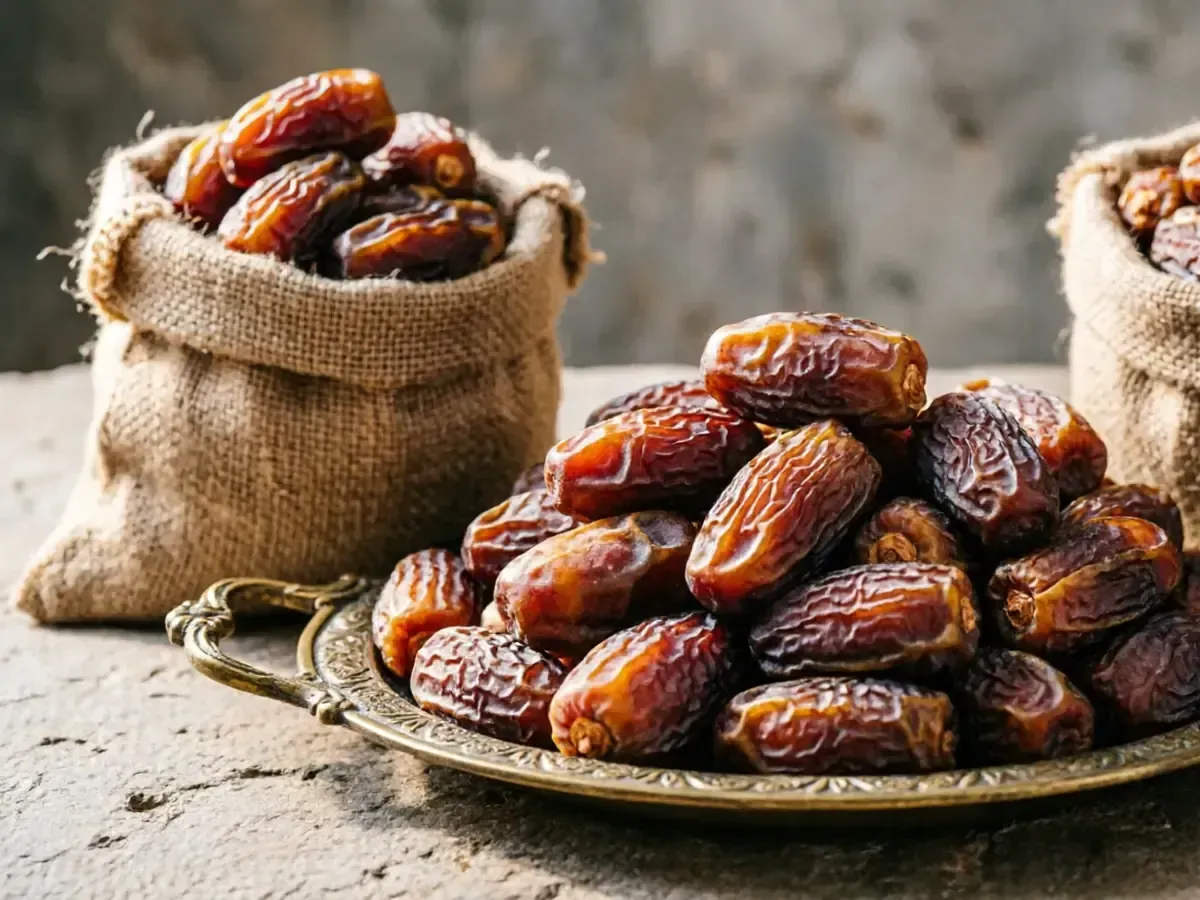
Egypt has numerous local cultivars and regional date traditions. Buyers may hear names such as Siwi, Saidi, Hayani, Zaghloul, Samani, Amhat and others, in addition to internationally traded cultivars. Spellings can vary when Arabic names are transliterated. “Aswan dates” often describes regional origin or a family of offers rather than one single cultivar with a universal specification. Ask for the Arabic name where helpful, production region and physical reference sample so everyone is discussing the same product.
Variety affects colour, size, skin adhesion, sweetness, fibre, moisture, chew and presentation. Yet variety alone is not grade. A well-managed standard variety may outperform a poorly handled premium name. Build the specification around the consumer and use cultivar as one part of it. When introducing an unfamiliar Egyptian date to a new market, prepare tasting notes, use suggestions and clear origin storytelling. Retail success depends on communication as well as supply.
4. Translate your market into a written specification
Before requesting a quotation, write a one-page purchasing brief. Include product format, variety or acceptable alternatives, crop year, grade, size band, moisture or texture target, colour, permitted skin separation, defects, foreign matter, pits or pit fragments, additives, microbiological requirements, pesticide-residue expectations, packaging, label language, pallet standard, shelf-life target and required certificates. Add destination, volume, frequency, Incoterm and delivery window.
A useful specification distinguishes critical limits from preferences. Food-safety and legal requirements are non-negotiable. Brand colour or size preferences may have an agreed tolerance. Natural agricultural products vary, so state the sampling method and acceptance level. Define what happens when a lot falls outside the limit: rework, regrading, discount, rejection or replacement. This prevents both sides from arguing later about words such as “premium,” “clean” or “export quality.”
5. A practical bulk-date specification table
| Specification field | What the buyer should define | Evidence before shipment |
|---|---|---|
| Identity | Variety/local name, origin region, crop year and format | Lot code, supplier declaration and representative sample |
| Grade | Size band, colour, skin condition and defect tolerances | Random sample count, photos and inspection report |
| Composition | Moisture or texture range, additives if any | Agreed test method and certificate of analysis |
| Safety | Microbiology, residues, foreign matter and allergens | Accredited or approved laboratory reports as required |
| Processing | Washed, brushed, pitted, paste or other treatment | Process flow and production records |
| Pack | Net weight, food-contact material, carton and pallet | Packaging sample, drop/stack check where relevant |
| Label | Product name, origin, lot, dates, storage and language | Final artwork approved by the importer |
| Logistics | Temperature, humidity considerations and transit time | Loading record, seal and logger when agreed |
6. How to find an Egyptian dates exporter
Start with legal identity, not a social-media page. Obtain the full company name, commercial address, registration details, tax and export documentation relevant to the transaction, authorised representative and bank beneficiary. Egyptian commercial exporters normally need entry in the Exporters Register; GOEIC publishes information about this register. Ask for current evidence and verify it through appropriate official or professional channels. The contracting entity, invoice issuer and bank recipient should make commercial sense together.
Then map the physical supply chain. Does the exporter own a farm or packing facility, contract with producers, or trade finished goods? None of these models is automatically bad, but they create different controls. Identify where fruit is received, cleaned, sorted, treated, pitted, packed and stored. Ask whether subcontractors are used and how lot identity is maintained. A transparent trader with strong controls can be safer than an owner who cannot document processes.
7. Verify the packing and processing site
Request a current facility profile and, where appropriate, a live or independent audit. Review zoning, personnel hygiene, pest control, cleaning, foreign-body prevention, food-contact surfaces, water use, calibration, chemical control, glass and brittle-plastic procedures, traceability, hold-and-release, complaint handling and recall readiness. For pitted products, review how pits and hard fragments are controlled. For paste, examine grinding, heat treatment if used, metal detection and packaging hygiene.
Certifications can support due diligence, but a logo is not enough. Verify the certificate number, scope, facility address, product category, issuing body and expiry date. Confirm that the certified entity is the site producing your goods. A certificate for trading or another location may not cover the order. Ask for the most recent audit status and any relevant corrective actions, subject to confidentiality.
8. Food safety and laboratory testing
The test plan should be risk-based and destination-specific. Depending on format and market, buyers may consider microbiological parameters, pesticide residues, mycotoxins or contaminants, moisture or water activity, sulphites or other additives, heavy metals, foreign matter and authenticity. The relevant legal limits and methods must come from the destination’s competent rules and the buyer’s risk assessment. Do not copy a generic panel without confirming that it fits the product.
Agree who samples, where the sample is taken, how it is sealed, which laboratory is acceptable and what happens if results fail. A supplier-selected sample can be useful for screening but is weaker than a documented random lot sample. Laboratory accreditation should cover the relevant method where required. Read the report carefully: sample description, lot, dates, methods, units and limits must match the shipment. A report from a previous crop or another product does not prove current-lot compliance.
9. Samples that represent commercial reality
A beautiful courier box may not represent the production lot. Ask whether the sample comes from existing stock, a pre-production trial or the exact crop and packing line intended for the order. Record its date, lot, storage condition and selection method. If the sample is manually selected, treat it as a style reference only and use an inspection to approve the final lot.
Evaluate dates under consistent lighting and temperature. Record count or size, net weight, colour distribution, skin separation, deformation, dryness, stickiness, crystallisation, insect damage, mould, fermentation odour, foreign matter, pits, texture and taste. Cut representative fruit to inspect the interior. For pitted goods, examine a sufficiently large sample for fragments. Keep a sealed reference sample when practical, but remember that natural products continue to change during storage.
10. Grading, defects and acceptance
Define defect categories with photographs. Critical defects may include contamination, live infestation, mould or unsafe foreign matter. Major defects may include severe skin damage, fermentation, unacceptable dryness, substantial deformation or incorrect variety, depending on the specification. Minor appearance variation may be commercially acceptable within a limit. The classification should reflect your customer and regulatory risk rather than an arbitrary template.
State the inspection level and sample size. For large lots, statistical sampling is more defensible than opening a few convenient cartons. Inspect across pallets, production times and locations in the container. Report individual results as well as averages because an acceptable average can hide a problematic subgroup. The inspection protocol should specify when re-sampling or reworking is permitted and who authorises release.
11. Packaging for wholesale, retail and private label
Bulk formats may use lined cartons, bags within cartons or food-grade containers. Retail formats include trays, pouches, tubs and gift boxes. The package must protect dates without creating condensation, crushing or odour transfer. Confirm food-contact compliance for the destination, seal integrity, migration evidence where required and pack performance through the expected temperature and stacking conditions.
Private-label artwork should be approved by the importer’s regulatory reviewer. Typical fields can include legal product name, ingredients, net quantity, origin, lot, production or packing date, best-before date, storage instructions, nutrition information, importer details, barcode and local language. Exact requirements vary. Do not print a full production run until the final legal text, date format and barcode have been tested. Retain approved artwork and a finished-pack sample.
12. Shelf life and storage
Shelf life is not a number that can be copied across all dates. It depends on moisture, processing, hygiene, package barrier, temperature, humidity and the quality expected at the end of life. Ask how the proposed shelf life was validated and under which storage conditions. Compare those conditions with your warehouse, transport and retail reality. A label claim longer than the supporting evidence creates avoidable risk.
Dates can darken, dry, become sticky, crystallise or develop quality defects when conditions are unsuitable. Cold or temperature-controlled storage may protect selected products, but the correct regime depends on the type and packaging. Avoid condensation during temperature transitions. Use first-expired-first-out inventory, monitor the storage environment and keep lots separated for traceability. For an unfamiliar product, conduct a controlled stability review before launching a long shelf-life claim.
13. Price: compare landed value, not only FOB per tonne
A low product price can be offset by weak grading, excessive moisture variation, poor palletisation, claims, repacking, shrink or slow sales. Build a landed-cost model including product, packaging, inspection, laboratory testing, inland haulage, export handling, documents, freight, insurance, destination fees, duty, tax, customs broker, storage and finance. Convert that total to cost per saleable kilogram or consumer pack.
Confirm whether the quotation is net or gross weight and whether pallets are included. State the Incoterm and named place precisely. Compare payment terms and currency exposure. For processed formats, calculate usable yield. For retail, include packaging compliance and barcode costs. If suppliers quote different grades or moisture levels, normalise the comparison before deciding. The cheapest nominal tonne is not necessarily the most profitable tonne.
14. Contract terms that protect both sides
The purchase contract should identify product, crop year, origin, specification version, quantity tolerance, packaging, artwork, price, currency, Incoterm, shipment window, documents, inspection, testing, release authority, payment, claims, dispute mechanism and governing law. Attach the approved specification and reference photos. State whether partial shipment or substitution is allowed. Do not rely on chat messages to carry critical terms.
Payment structure should reflect relationship and risk. Options can include deposits with balance against defined evidence, bank instruments or other agreed mechanisms. No method removes all risk. Confirm the beneficiary independently using known contact details, especially if bank instructions change. Consider cargo insurance appropriate to the Incoterm and product. Obtain professional legal, banking and insurance advice for material transactions.
15. Egyptian export workflow and documents
Egyptian export procedures depend on the product and transaction. Commercial shipments commonly involve exporter and customs registrations, a commercial invoice, packing list, electronic customs declaration and transport documents. Egypt’s Nafeza national single window provides the export-declaration workflow and uses shipment references for processing. GOEIC handles exporter-registration and origin-related services within its remit. The customs broker should confirm the current file before loading.
A certificate of origin may be needed for customs or commercial purposes, but it does not automatically create preferential tariff treatment. The applicable form and rule depend on destination, HS code and trade agreement. Food products can require additional health, inspection or product documents. The destination may require an import permit, registration, certificate of analysis, health certificate or legalised papers. Build one document matrix showing issuer, format, original or copy, due date and responsible party.
16. Traceability and recall readiness
Every finished lot should link backward to receiving records, supplier or farm group, processing date, line, treatments, packaging materials and test results, and forward to the customer shipment. Test the system with a traceability exercise: choose a carton code and ask the facility to reconstruct the history and quantities. A credible response should be timely, coherent and supported by records.
Agree a recall and incident-contact process before shipment. Both parties need named contacts outside normal working hours, rules for holding stock and a way to share distribution data securely. If the exporter consolidates several sources, the system must preserve their identity or document the controlled mixing. Traceability is not only regulatory paperwork; it shortens investigations and protects both brands when a problem appears.
17. Pre-shipment inspection and loading
The final inspection should confirm identity, quantity, packaging, labels, pallet condition, representative quality, test-release status and document readiness. Inspect random cartons across the complete lot after production is substantially finished. Check container cleanliness, odour, dryness, damage, doors and suitability. Record loading order, pallet count, seal number and photographs. If temperature control or loggers are part of the plan, document placement and activation.
A pre-shipment pass does not guarantee arrival condition, but it creates a reliable departure record. Define hold points: fruit should not load if critical test results, phytosanitary or other mandatory release steps are incomplete. If rework occurs, re-inspect the affected characteristics. Send the importer a concise release pack before departure so customs and receiving teams can prepare.
18. Arrival inspection and claims
Before arrival, book customs, inspection and warehousing. On receipt, record seal integrity, transport condition, logger data and external carton condition before unloading changes the evidence. Sample across the lot using the agreed method. Compare results with the signed specification and departure report. Separate quality non-conformance from transit damage, customs delay or storage failure because responsibility may differ.
If a claim is possible, notify the counterparty within the contract period and preserve evidence: dated photographs, videos, sample records, weights, temperature files, laboratory or survey reports, invoices for mitigation and disposal evidence where relevant. Take reasonable steps to reduce loss without destroying evidence. Commercial settlements work better when the contract already defines the process and both sides use objective records.
19. Red flags when buying Egyptian dates in bulk
- The seller refuses to identify the contracting company, production site or bank beneficiary.
- The certificate scope or address does not match the facility making the goods.
- Only perfect studio samples are available, with no random lot evidence.
- The quote says “premium export quality” but contains no measurable specification.
- Crop year, moisture, variety or processing format is unclear.
- Laboratory reports refer to another lot, old crop or different product.
- The supplier promises that no destination checks or permits are needed without asking for the HS code and country.
- Bank details change at the last moment through an unverified message.
- The seller resists independent inspection or asks to load before critical results.
- The price is materially below comparable offers with no transparent explanation.
One red flag may have a reasonable explanation, but several together justify stopping the transaction. Verification should be proportionate to order value and risk. Read our separate guide to verified Egyptian suppliers and red flags for a broader company-level workflow.
20. A 12-step buying workflow
- Define consumer, format, destination and annual volume.
- Confirm HS classification and destination import requirements.
- Issue one written specification to comparable suppliers.
- Verify exporter identity, facility and relevant certifications.
- Approve a representative sample and packaging artwork.
- Agree price, Incoterm, contract, payment and insurance.
- Approve the risk-based test and inspection plan.
- Review production and traceability evidence.
- Inspect the finished lot and loading conditions.
- Check draft documents before final issue and departure.
- Prepare customs, storage and arrival inspection.
- Score the supplier after delivery and correct weaknesses before repeating.
21. Questions to put in your first inquiry
- Which exact variety or local type, crop year and growing region are offered?
- Is the offer whole, pitted, pressed, paste or another format?
- What are the grade, size, moisture, defect and foreign-matter limits?
- Who is the legal exporter and which facility processes the lot?
- Which certifications and laboratory tests cover the site and product?
- What carton, liner, consumer pack and pallet pattern are available?
- What quantity is available for the requested shipment window?
- Which documents can be issued for the destination?
- What Incoterm, named place, payment schedule and lead time apply?
- Will the supplier accept random pre-shipment inspection?
22. Choosing the right exporter for a repeat programme
For a one-off trial, a supplier may succeed through close supervision. A repeat programme needs systems: crop planning, capacity visibility, specification control, supplier approval, calibrated equipment, staff training, traceability, corrective action, document accuracy and reliable communication. Score these capabilities after each shipment. Track on-time readiness, inspection pass rate, document corrections, claims, response time and customer feedback.
A sourcing partner can coordinate requirements, suppliers, samples, inspections and shipment evidence on the ground, but the buyer retains responsibility for destination approvals and final commercial decisions. ExpertExporter’s role is to make the Egyptian side more visible and organised. To discuss a programme, send the product format, expected volume, packaging, target quality, destination and timeline through Make Your Order.
Frequently asked buyer questions
Can I buy Egyptian dates in bulk under my own brand?
Yes, subject to the selected facility’s capability, minimum order, packaging availability and the destination’s labelling rules. Approve legal artwork before production and use a controlled trial where the pack is new.
Are Aswan dates the same as Medjool?
No. “Aswan dates” usually refers to regional origin or local offers, while Medjool is a named cultivar. Compare the exact variety, grade, texture, size and market position. See the Aswan dates versus Medjool comparison.
Which certificate proves the dates are safe?
No single certificate proves every lot is safe. Use a combination of facility controls, valid scope-specific certification where relevant, traceability, risk-based testing, inspection and correct official shipment documents.
What is the minimum order?
It varies by product, packaging and supplier. A custom retail package often requires more material and setup than a standard bulk carton. Share the annual forecast as well as the first trial quantity.
Can an exporter guarantee customs clearance?
No responsible exporter can guarantee a foreign authority’s decision. The importer and broker should confirm classification, permits, documents, labels, duties and restrictions before shipment.
This handbook is educational and commercial guidance, not legal, customs, food-safety or laboratory advice. Rules and market conditions can change. Verify the exact product, HS code, facility, documents and destination requirements for each shipment.