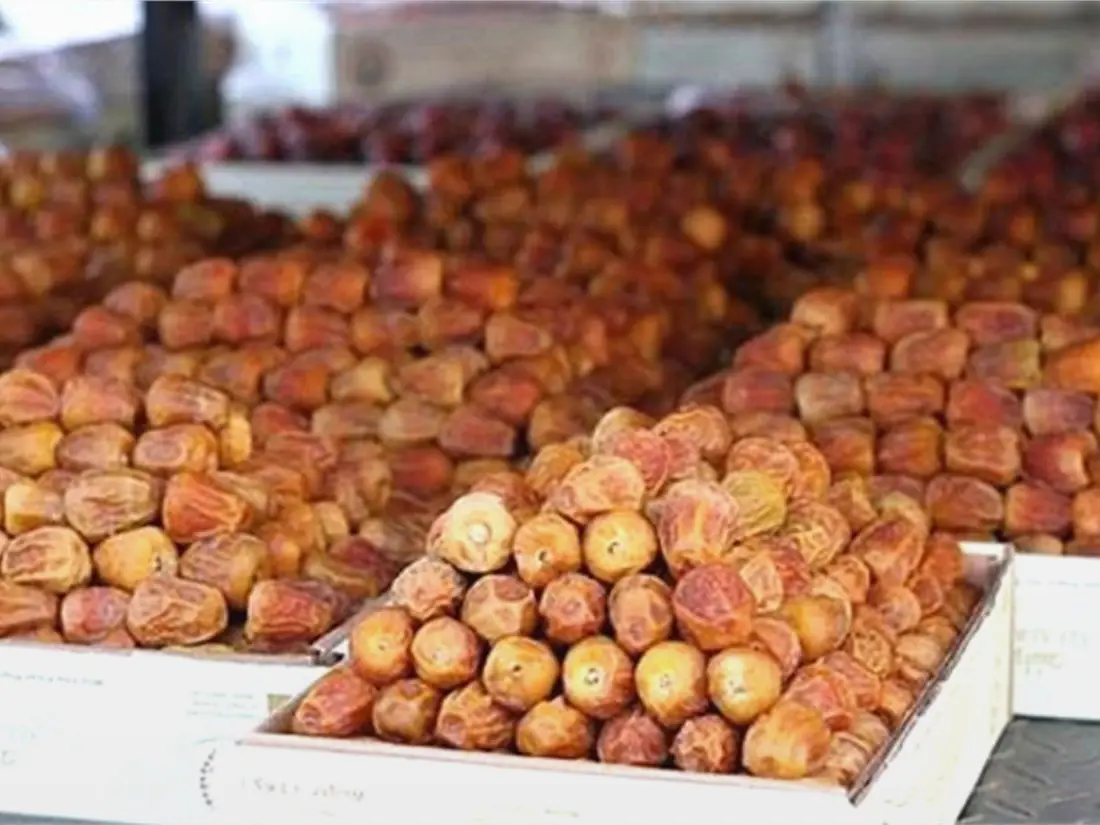
“Aswan dates” and “Medjool” are not equivalent labels. Aswan identifies a production region in southern Egypt and can cover different local date types and grades. Medjool is a named cultivar grown in more than one country. A useful comparison must therefore identify the exact Aswan variety and lot before judging it against a Medjool specification.
Buyer comparison
| Factor | Aswan offer | Medjool offer |
|---|---|---|
| Identity | Regional description; ask for exact cultivar/local name. | Named cultivar; still verify origin, grade and authenticity. |
| Market story | Egyptian regional origin and local flavour discovery. | Internationally recognised premium category in many markets. |
| Size and texture | Can vary widely by type and grade. | Often sold by defined size grades, but specifications still vary. |
| Use | Retail, wholesale or processing depending on the specific product. | Frequently positioned for premium whole-fruit retail and gifting. |
| Price | May create accessible value, subject to quality and landed yield. | Recognition and larger grades can support a premium; compare landed value. |
Do not compare names—compare samples
Send both suppliers the same target for net weight, size, moisture or texture, appearance, defects, crop year, packaging, shelf life and destination compliance. Evaluate blind samples when possible. Record consumer acceptance, saleable yield and storage performance. If the Aswan offer is a semi-dry local variety, comparing it only with a large soft Medjool on appearance will miss different uses and price points.
Retail positioning
Medjool can reduce consumer education where the name is already known. A distinctive Aswan product may need stronger storytelling but can offer differentiation and an authentic Egyptian origin. Use clear factual language: name the exact variety and region rather than presenting every Aswan date as a single standardized product.
Food manufacturing and wholesale
For ingredients, appearance may matter less than moisture, sweetness, fibre, pit removal, usable yield, microbiology and price per usable kilogram. A local Egyptian variety can be commercially stronger for a particular paste, bakery or foodservice use. Run production trials instead of extrapolating from fresh eating.
Decision checklist
- Identify the exact Aswan variety, crop year and processor.
- Compare equivalent formats and grades.
- Test representative commercial samples.
- Calculate landed cost and saleable or usable yield.
- Check shelf life, documents and destination rules.
- Select the product that fits the customer—not the most famous name.
For supplier verification, packaging and shipment planning, use the complete Egyptian Dates Export Guide 2026.
There is no automatic “better.” Medjool may fit a recognised premium shelf; a verified Aswan variety may fit value retail, regional storytelling or processing more effectively.